
 Myrna Whitaker
  Nils Lund
  Anna Broberg
  Lo Elmqvist


What Tamarinden will become
5/10/2026, 15:55
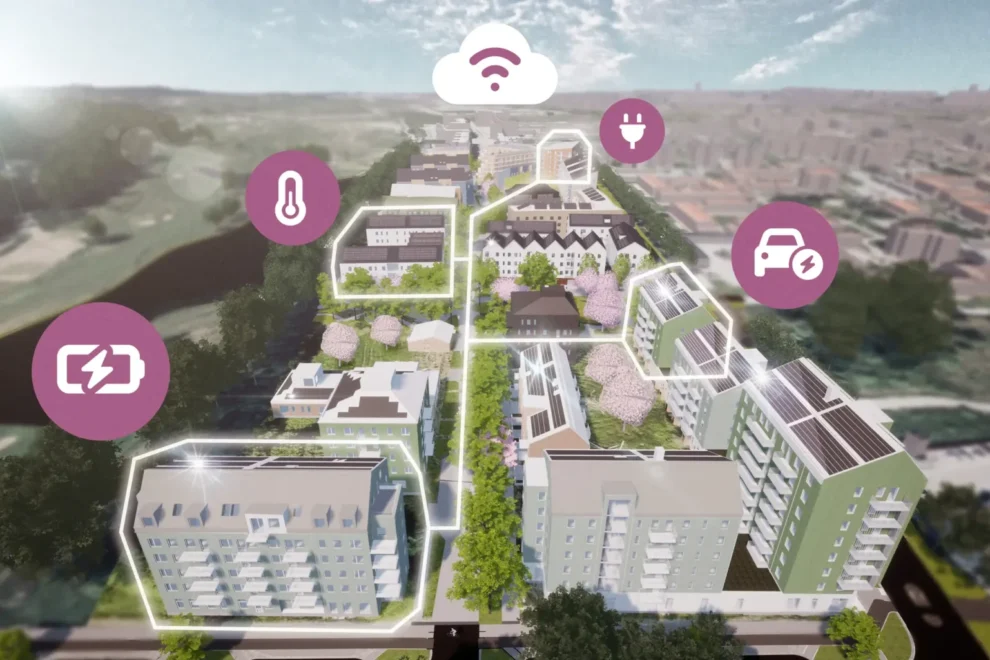
By sharing energy between properties, the new residential area of Tamarinden in Örebro can save 30 percent in energy and cut its peak power demand in half. It is a one-of-a-kind solution.
Tamarinden is a new residential area taking shape in Örebro, with around 800 apartments and commercial spaces. Several developers are building the neighborhood together, and that collaboration is the key, not least when it comes to energy.
The first phase of the project initially includes properties owned by Tornet and CapMan. Meanwhile, the municipality is preparing to connect the remaining six properties once they are completed, including two owned by ÖBO.
“The Tamarinden energy partnership is working with Via Europa to make the physical sharing of electricity possible. The DC cable is currently being installed along Tamarindvägen, while the business aspects of the energy sharing are being discussed. Our updated goal is to have energy sharing up and running around the turn of the year,” says Jenny Källmén, project manager at Örebro Municipality.
Tamarinden is built on five themes that together will give the neighborhood its unique character: Life Between Buildings, Green Courtyards, Innovation and Inviting Architecture, Sustainable Mobility, and Smart City.
“We are creating a neighborhood that will produce, store, and share energy within its own boundaries. That’s not something that is usually done, and in addition, we are working to build social sustainability in the area. At the municipality, we are working to make public spaces inviting and designed for people rather than vehicles. Our streets are more like park plazas with a green focus,” says Jenny Källmén.
The neighborhood’s main street, Tamarindvägen, will become a pedestrian-priority zone where car traffic is directed away from the street.
“We’re really thinking the opposite way when it comes to how a main street is usually designed. We have started finishing Tamarindvägen and will soon have completed two of the area’s three parks. The goal is to make room for people in the streetscape instead of vehicles – it’s a new way of thinking,” says Jenny Källmén.