
 Myrna Whitaker
  Nils Lund
  Anna Broberg
  Lo Elmqvist


Japan approves first 3D-printed concrete house
13/02/2026, 15:42

A 3D-printed concrete house has been approved by Japanese authorities. It’s the first time a two-storey building using the technology meets the country’s stringent seismic standards.
Startup company Kizuki and construction firm Onocom have completed Japan’s first government-approved two-storey house in 3D-printed concrete in Miyagi Prefecture.
The landmark project proves the technology works in earthquake-prone areas.
The companies used a custom Cobod printer that prints from half a metre below ground up to seven metres high. They used 39 cubic metres of material to create 50 square metres of floor space.
The ground floor covers 31 square metres and the upper floor 19 square metres. The design takes inspiration from caves, featuring 3D-printed arches, floor slabs and curved interior elements.
A four-person crew operated the printer in temperatures ranging from 10 to 35 degrees Celsius.
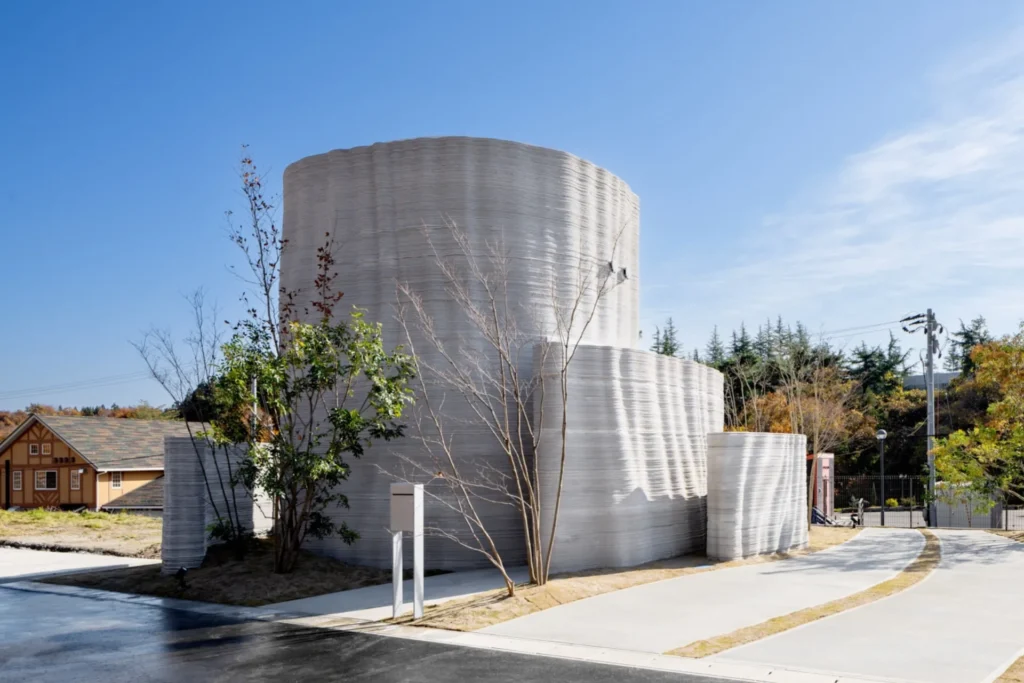
The entire structure meets government seismic requirements.
Japan has the world’s toughest seismic standards. It’s a real trial by fire, but the construction passes the test.
Kizuki now plans to expand its printing technology to infrastructure projects, disaster prevention and post-disaster reconstruction.